← All projects

Project 02

End-to-End Sales & Order Operations Platform

Category

Wholesale Distribution · Sales Enablement · Order & Billing Operations · Warehouse Performance

Role

Director of Sales & Commercial Operations | Distribuidora y Ferretería Asturias, S.A. · 2025–Present

Digital transformation for a multi-location wholesale distributor: one system, three chapters, carrying an order from the catalog to invoicing to warehouse fulfillment — with the performance data to manage it.

Presented as a single transformation in three chapters: Sales Enablement, Order & Billing Operations, and Warehouse Performance. All screenshots are anonymized; pricing, customer names, and monetary figures are blurred.

The challenge

Fragmented channels slow the entire order cycle

The sales team relied on fragmented channels to verify product information, pricing, inventory, promotions, and order details. This created unnecessary back-and-forth, increased the risk of outdated information, and slowed the handoff between sales, warehouse preparation, and invoicing.

What I found

The gap was between departments, not inside them

Each department was doing its job, but the order itself had no shared home. Sales worked from information that could already be outdated, billing rebuilt context from messages, and warehouse work was distributed by availability rather than by measured workload. Nobody could answer a simple question — where is this order right now — without asking someone else.

So I treated the order as the unit of design: one record that moves through the organization, gains status at each step, and leaves data behind for management decisions.

My approach

One system, three chapters

01

Sales Enablement

  • Real-time catalog, pricing, inventory
  • Order creation from the catalog
  • AI-assisted quotations and cross-sell
02

Order & Billing Operations

  • Centralized invoicing queue
  • Status tracking and documentation
  • Synchronized with SAP Business One
03

Warehouse Performance

  • Order assignment to dispatch teams
  • Productivity and error tracking
  • Reports for management decisions

End-to-end flow

From product catalog to invoicing

  1. Product catalog
  2. Sales order
  3. Warehouse queue
  4. Order preparation
  5. Billing portal
Invoiced order (synced with SAP B1)Warehouse team assignment & fulfillmentProductivity & error reporting

Chapter 01 · Sales Enablement

Sales & Order Management Portal

I led the development of a centralized sales portal that gives representatives real-time access to product information and supports the complete order-submission process.
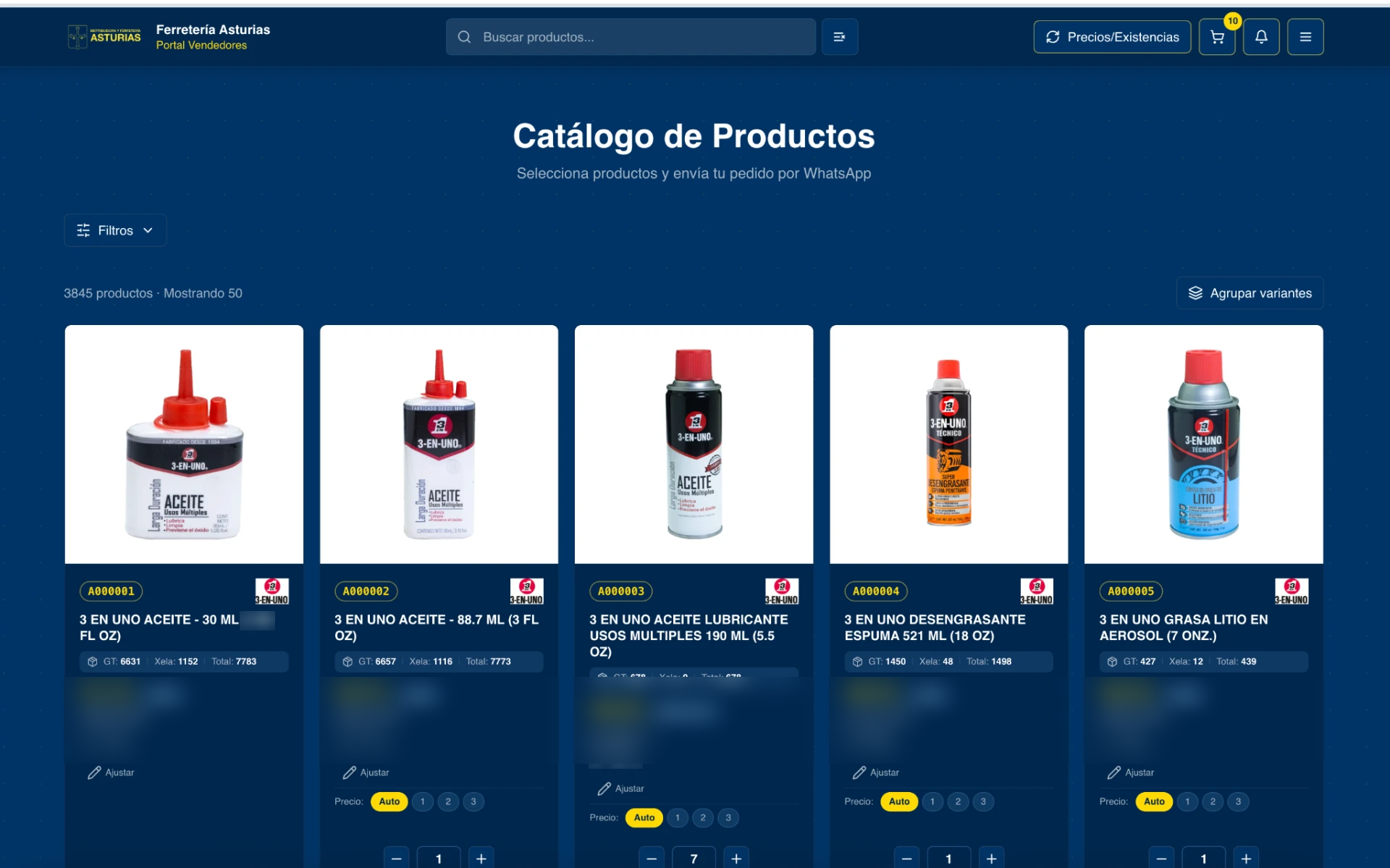
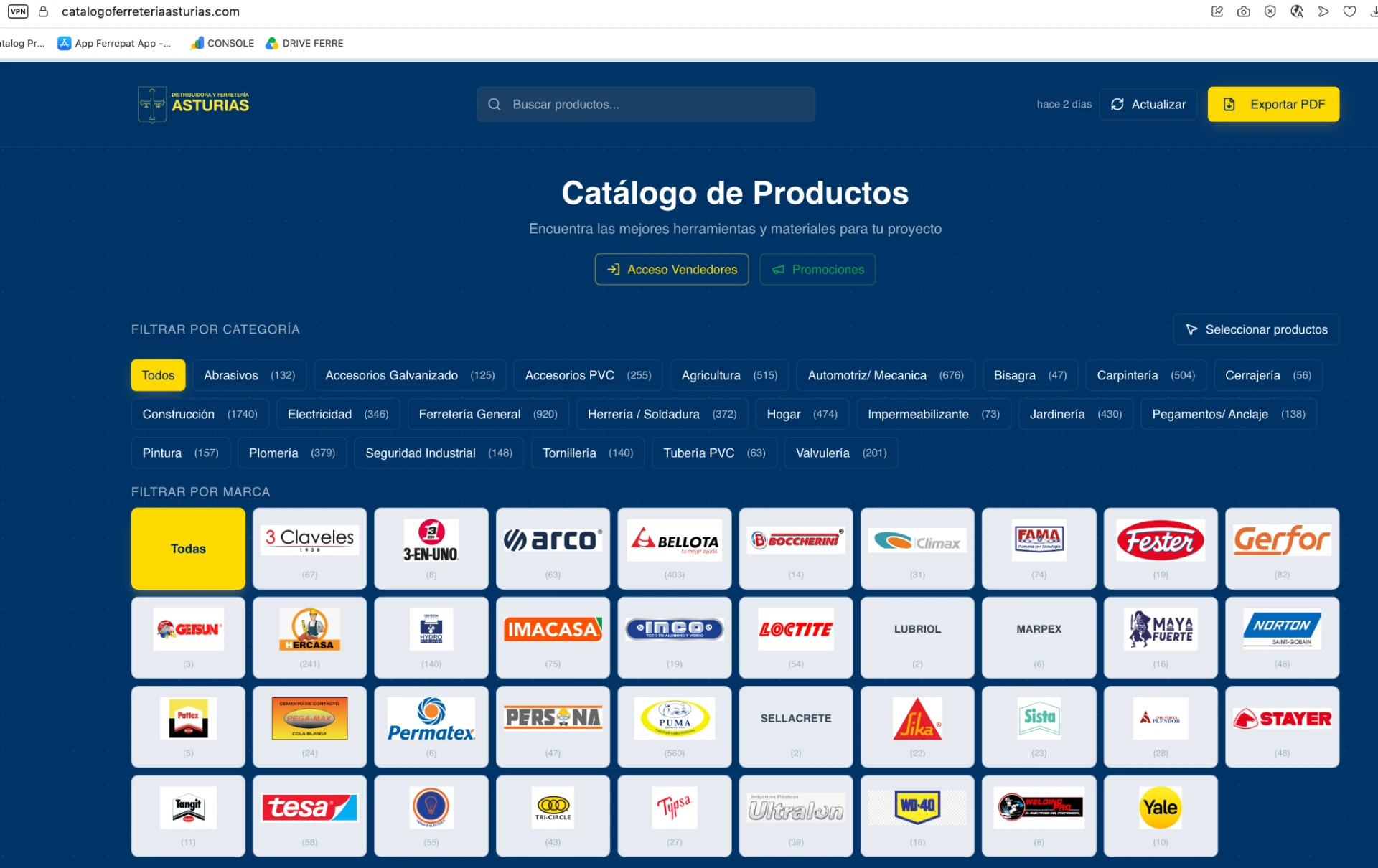
  • Search and filter thousands of products
  • View updated prices and inventory availability
  • Receive notifications about promotions and new products
  • Build customer orders directly from the catalog
  • See related-product recommendations for cross-selling
  • Import a written or photographed quotation using AI-assisted product matching
  • Submit orders into a structured workflow for warehouse preparation and invoicing
Sales rep ordering portal
Sales rep ordering portalReps see live product availability and place orders that flow straight to the warehouse team for picking, then on to invoicing.
Real-time product catalog
Real-time product catalogThousands of products filtered by category and brand, refreshed as new items and price changes land — no more outdated printed lists.
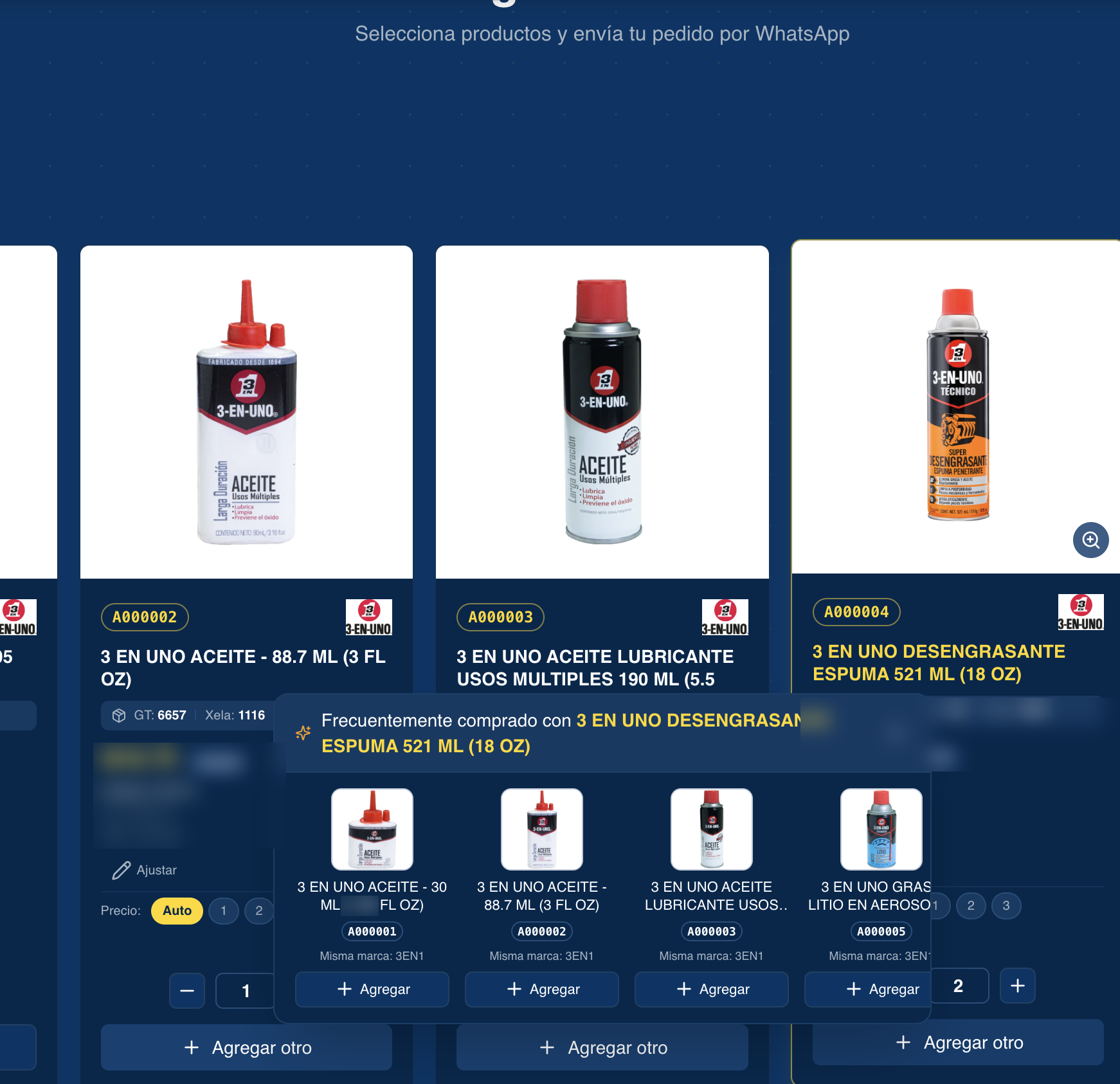
Guided cross-sell
Guided cross-sellFrequently-bought-together suggestions surface at the moment of order entry, so reps add the attachment items instead of remembering them.
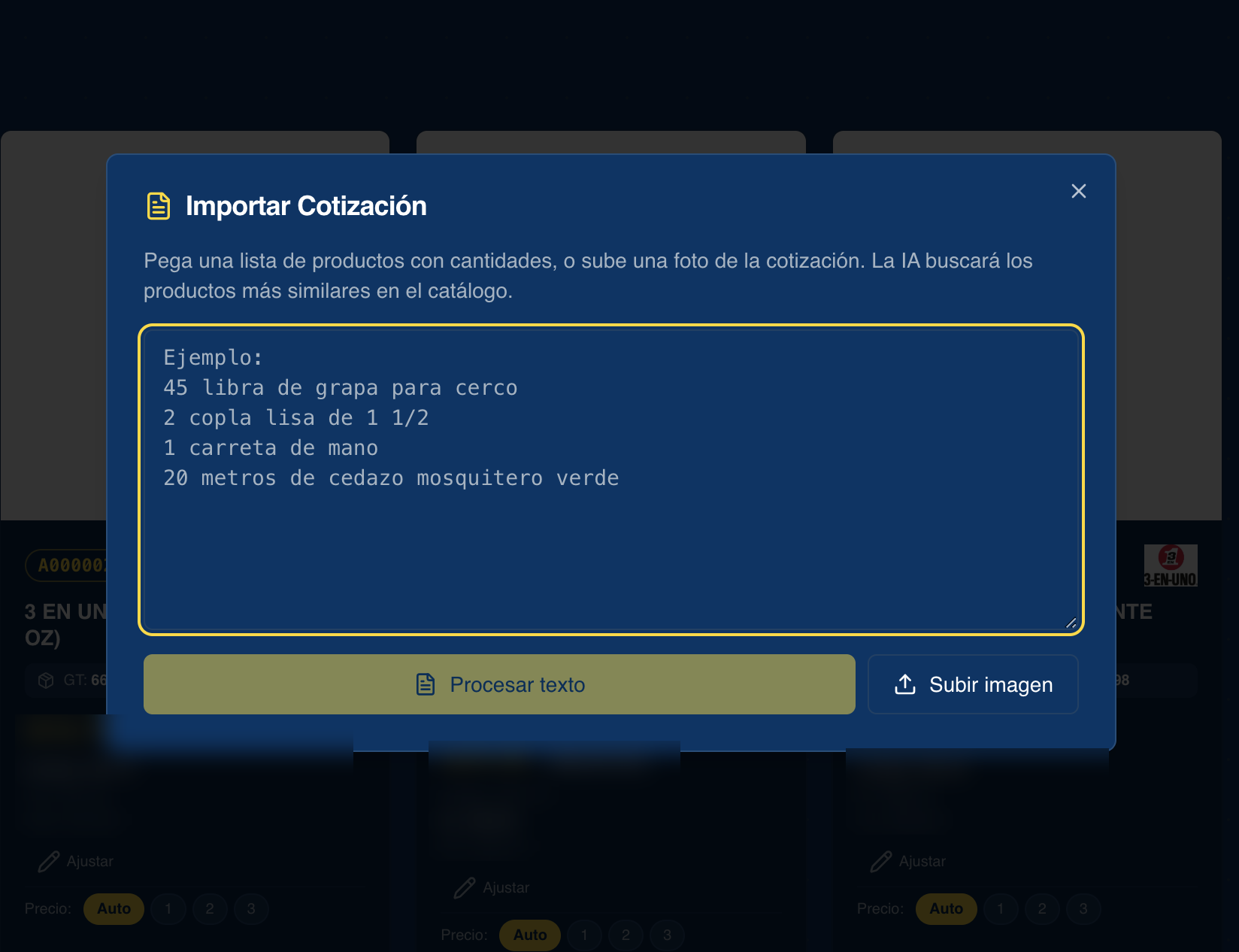
Quote import with AI matching
Quote import with AI matchingA rep pastes or photographs a customer's list and the system matches each line to the closest catalog product.
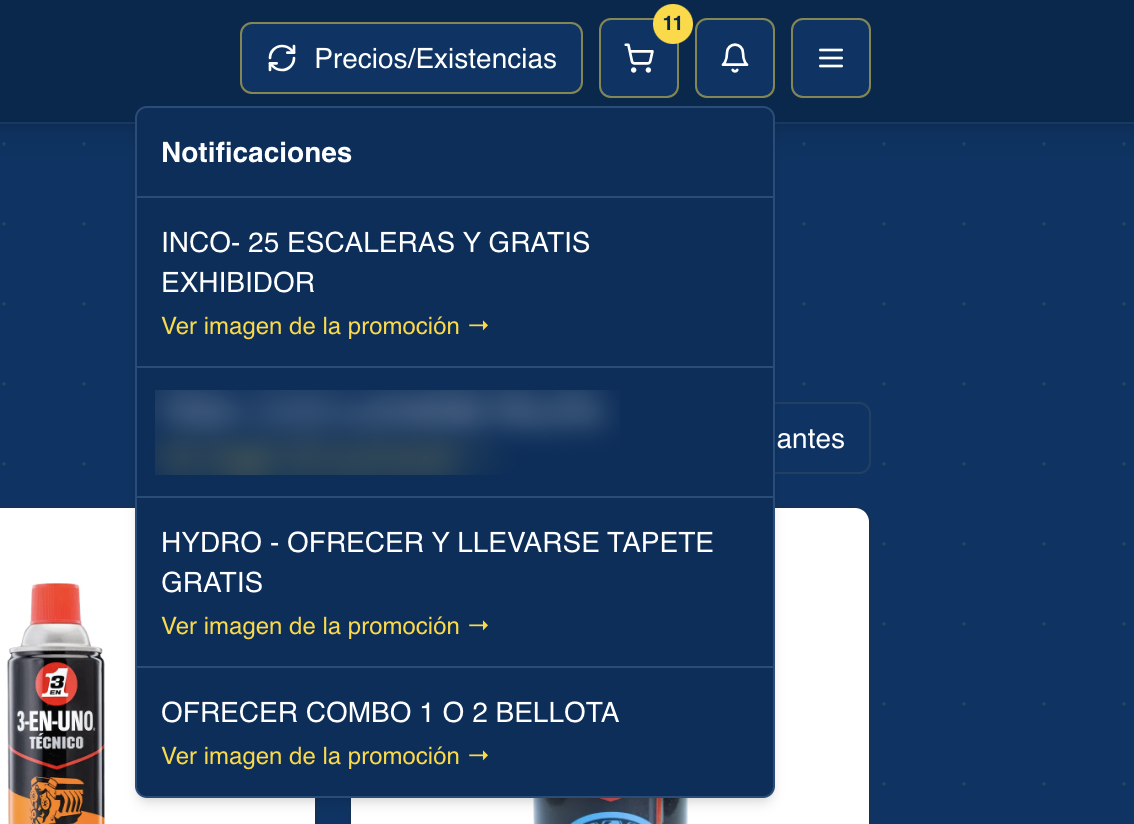
Promotion notifications
Promotion notificationsActive promotions reach every rep in the field the same day they launch.

Chapter 02 · Order & Billing Operations

Billing Operations Portal

I designed a centralized billing workflow that converts sales orders into organized, trackable requests for the invoicing team. Once an order is placed in the management portal, it lands in the billing portal, which synchronizes with SAP Business One.
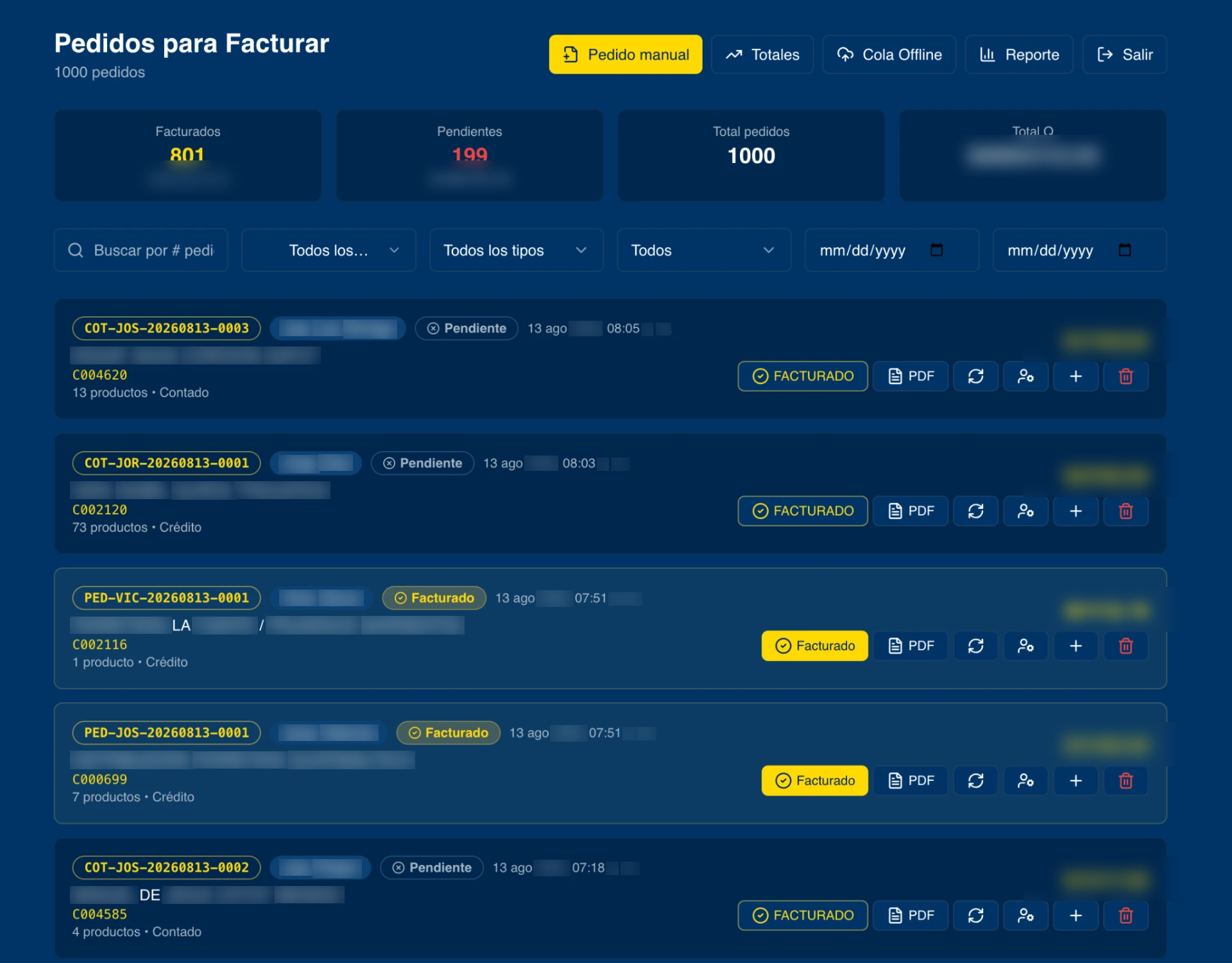
  • Centralized queue of orders ready for invoicing
  • Clear status tracking: pending or invoiced
  • Search and filtering by order, salesperson, order type, status, and date
  • Manual order creation for exceptions or alternate sales channels
  • PDF order documentation
  • Offline queue for connectivity interruptions
  • Real-time totals and operational reporting
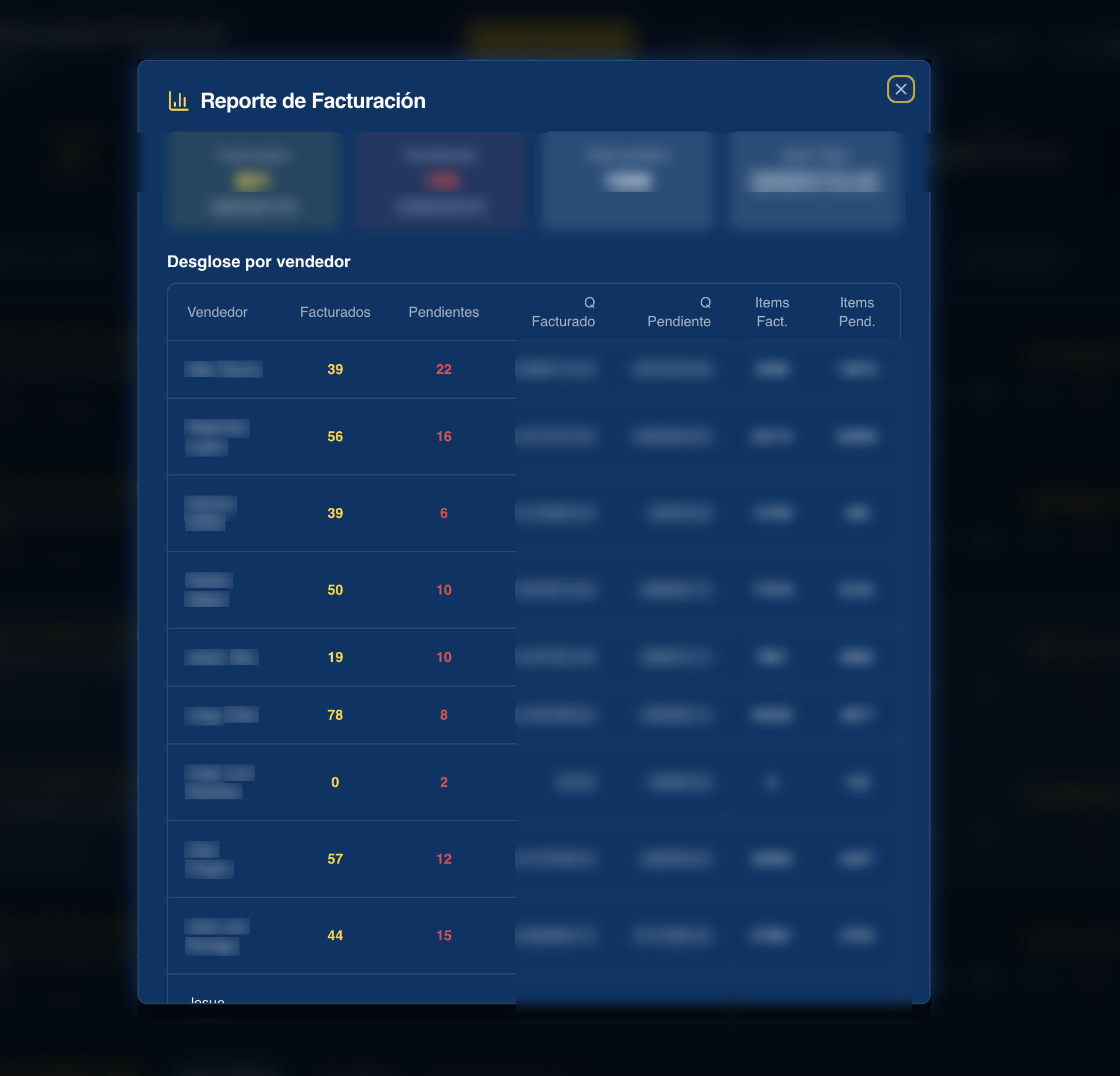
  • Performance breakdown by salesperson
  • Visibility into completed and pending orders and items
  • Structured handoff between sales, warehouse operations, and billing
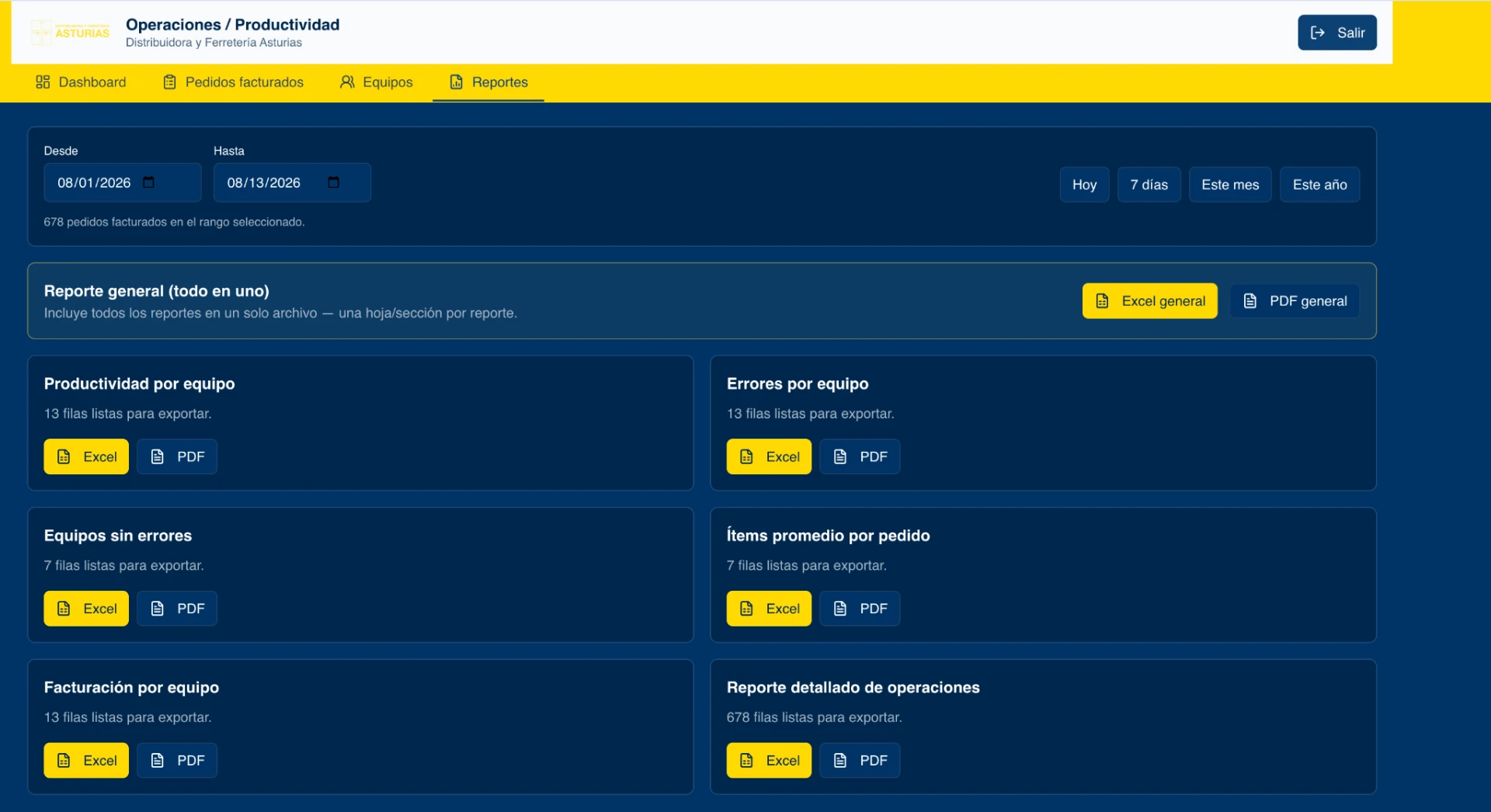
Centralized invoicing queue
Centralized invoicing queueEvery order ready for invoicing in one queue with pending or invoiced status, filters by order, salesperson, type, status, and date, PDF documentation, and an offline queue for connectivity interruptions.
Operational reporting by salesperson
Operational reporting by salespersonReal-time totals plus a performance breakdown by salesperson showing completed and pending orders and items. Names and amounts are blurred.

Chapter 03 · Warehouse Performance

Warehouse Operations & Workforce Analytics

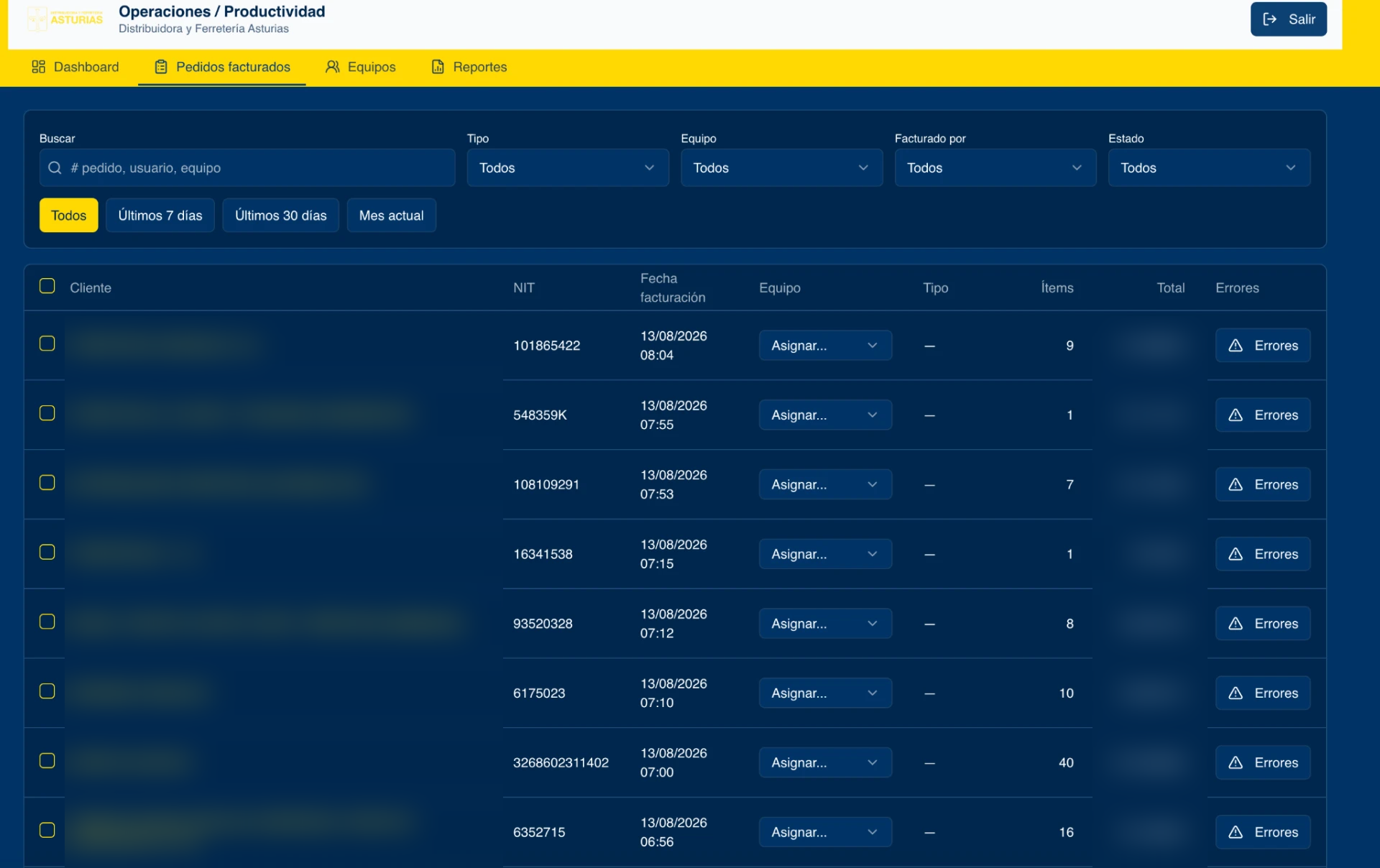
I designed an operations portal that connects invoiced orders with warehouse fulfillment, allowing managers to assign each order to the appropriate dispatch team and monitor workload, productivity, and fulfillment quality.

Warehouse work was difficult to measure consistently, which made it hard to distribute orders fairly, identify recurring errors, recognize high-performing teams, and determine where additional training or staffing was needed. I translated the warehouse workflow into a measurable team-based system: managers assign incoming orders, monitor each team's volume and accuracy, document issues, and analyze performance through centralized dashboards and reports.
  • Assignment of invoiced orders to warehouse teams
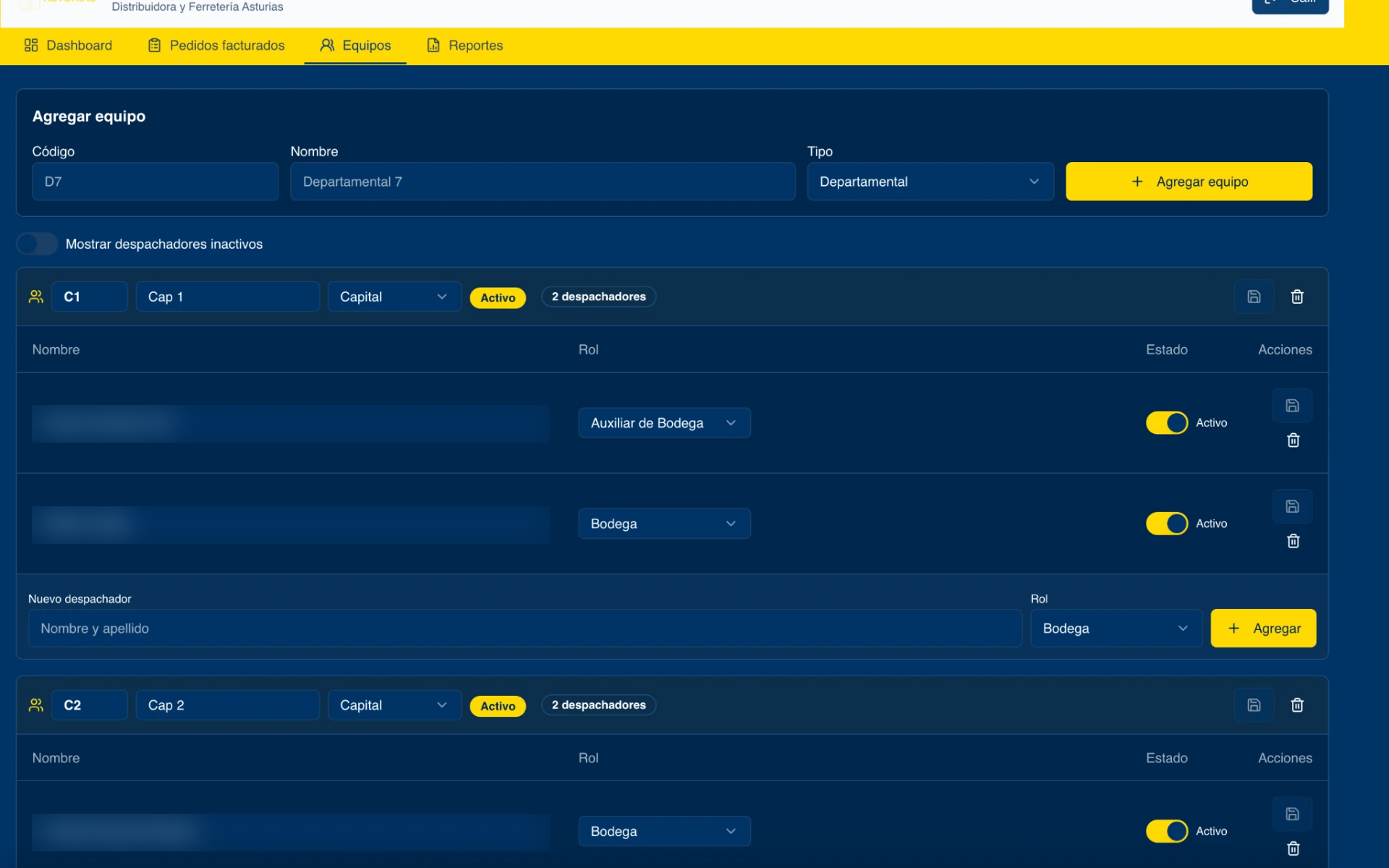
  • Team creation and employee-role management
  • Workload visibility by team and location
  • Tracking of orders and items processed
  • Documentation of fulfillment errors and operational issues
  • Comparison of productivity and error rates across teams
  • Time-period and team-type filters
  • Downloadable Excel and PDF reports
  • Identification of training needs and operational bottlenecks
  • Evidence-based support for coaching, recognition, staffing, and performance reviews
Assigning invoiced orders to dispatch teams
Assigning invoiced orders to dispatch teamsEvery invoiced order can be assigned to the right warehouse team, with filters by type, team, biller, status, and date. Customer names and amounts are blurred.
Teams and employee roles
Teams and employee rolesManagers create dispatch teams by location and type, then manage each member's role and active status. Employee names are blurred.
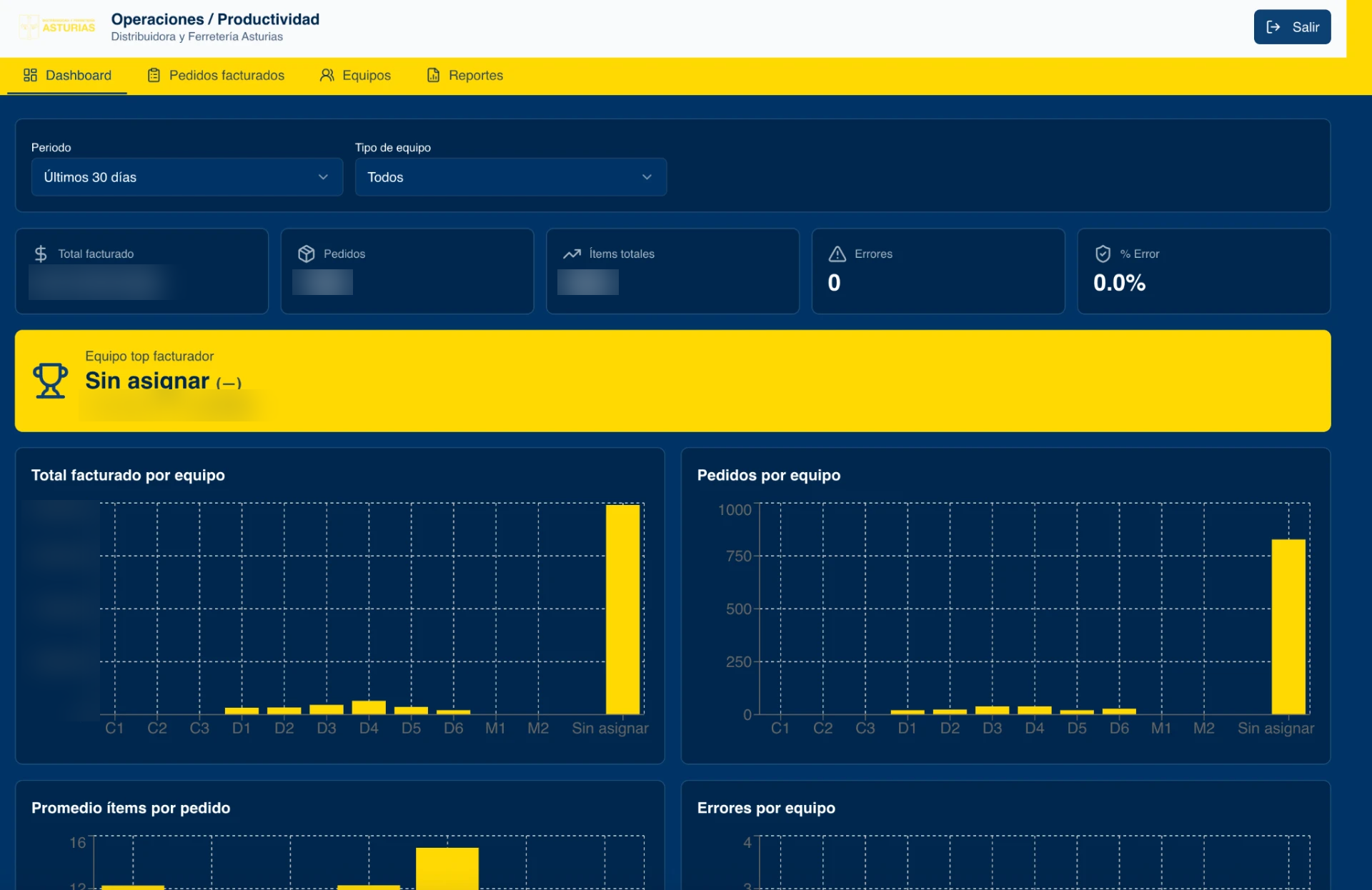
Workforce analytics dashboard
Workforce analytics dashboardVolume, items, errors, and error rate by team and period, plus unassigned-order visibility for spotting backlogs. Monetary figures are blurred.
Downloadable operational reports
Downloadable operational reportsProductivity, errors, error-free teams, average items per order, and detailed operations reports exportable to Excel or PDF for any date range.

The metrics I designed

Orders processed
Workload by team
Items per order
Complexity and operational load
Recorded errors
Quality and accuracy
Error rate
Proportional comparison across teams
Invoicing handled
Commercial value of the orders served
Unassigned orders
Accumulation and possible bottlenecks
Performance by period
Trends and consistency
Error-free teams
Recognition of quality

The platform provides objective operational data to support fairer coaching, recognition, training, staffing, and compensation discussions alongside managerial evaluation.

Problem solved

One shared status instead of scattered messages

Orders previously required multiple manual communications between sales, warehouse, and billing. The portal created a centralized workflow where each department could see the same order status, reducing uncertainty, duplicated follow-ups, and processing delays.

Business impact

What the system changed

  • Created a single source of truth for the sales team
  • Standardized the invoicing handoff
  • Created accountability across warehouse teams
  • Improved workload distribution
  • Made fulfillment errors measurable and traceable
  • Helped management identify coaching and training opportunities
  • Supported more consistent employee recognition and performance reviews
  • Increased visibility into unassigned orders and operational backlogs
  • Replaced subjective impressions with structured operational data
  • Connected warehouse performance with the broader order lifecycle
  • Provided leadership with real-time operational reporting
  • Preserved order continuity during connectivity interruptions
  • Reduced reliance on WhatsApp messages and manual tracking
  • Helped representatives identify cross-selling opportunities

My role

Director of Sales & Commercial Operations

I identified the operational gaps, mapped the end-to-end workflow, defined the platform requirements, prioritized features, coordinated development, and designed the process connecting sales, warehouse operations, and invoicing.

  • Interviewed the departments and documented the real workflow, not the official one
  • Defined the module scope, data model, and status logic for each order
  • Designed the metrics warehouse managers would be measured by
  • Prioritized releases so each chapter shipped value on its own
  • Coordinated development and validated each module with the teams using it

Key takeaways

What I would carry into the next system

  • Design the record, not the screen — a shared order status removes most cross-department messaging
  • Ship in chapters: sales enablement first earned the trust needed for billing and warehouse change
  • Measure work before you manage it, and agree on the metric definitions with the people measured
  • Offline resilience is a requirement in distribution, not a nice-to-have
  • AI is most valuable at the point of friction — matching a written quote to catalog products

Key takeaway

Software only fixes an operation when it is designed around how the work actually moves between people.